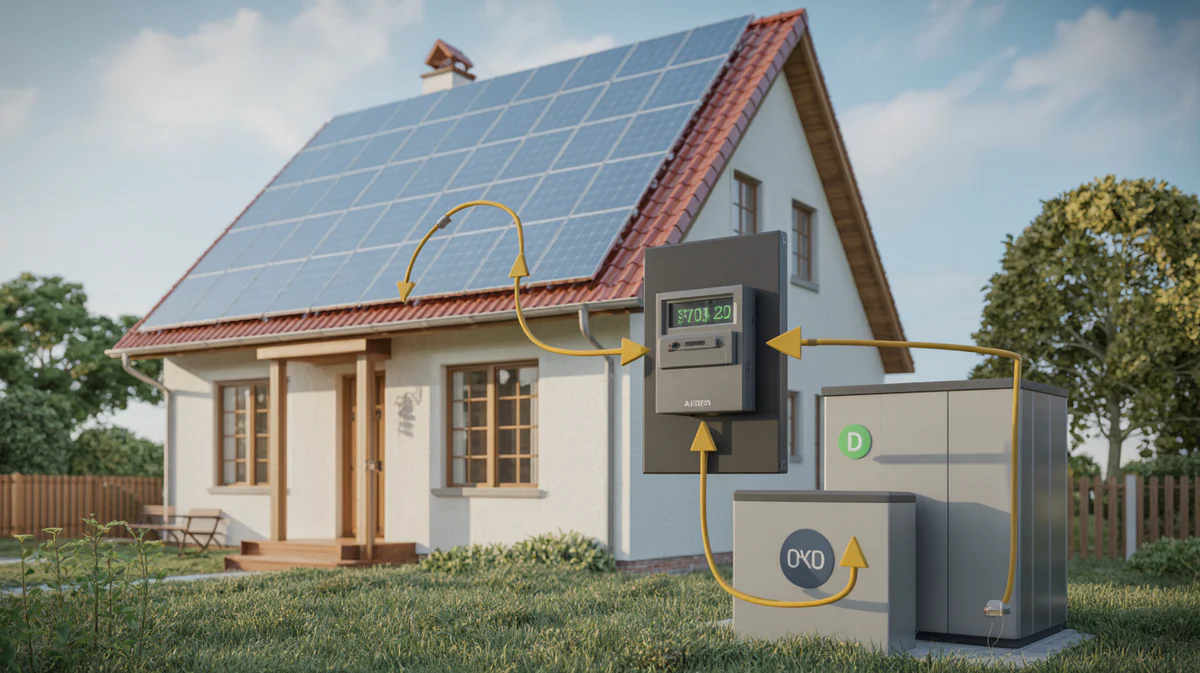
The first EV often fits into a household with little drama. The second one is where the math gets interesting. Suddenly the garage has two batteries on wheels, two charging schedules, and a bigger chance that evening electricity demand piles up right when the utility would rather it did not.
The U.S. Energy Information Administration says the average U.S. residential electric-utility customer purchased 10,791 kWh in 2022, or about 899 kWh per month. Two EVs can add a noticeable new layer on top of that baseline, especially for long commutes or cold-weather driving.
Start with driving, then translate it to energy
The EPA reports EV efficiency on window stickers as kWh per 100 miles. Using a simple 30 kWh per 100 miles example, a 20-mile day needs about 6 kWh before charging losses, while a 60-mile day needs about 18 kWh. The charger rating matters, but daily miles are the better starting point.
| Daily miles | Energy at 30 kWh/100 mi | What it means |
| 20 | About 6 kWh | Easy daily top-up |
| 40 | About 12 kWh | Noticeable but manageable |
| 60 | About 18 kWh | Needs scheduling discipline |
Those numbers are not a substitute for the actual vehicle rating, but they keep the conversation grounded. A home with two short-range daily drivers may need less new capacity than a home with one long commute and weekend road trips.
Storage changes the timing problem
Solar panels make energy during daylight. Vehicles often need energy after work. A battery does not create energy, but it can move solar production from one part of the day to another. That is useful when one car is home during the day and the other arrives in the evening, or when the family wants to avoid peak utility hours.
For homeowners thinking beyond a single charger, SigenStor Neo is a relevant system to study because it is built around integrated solar storage and EV charging rather than adding each piece separately. The supplied Sigenergy product library describes the SigenStor family as a 5-in-1 architecture with solar inverter, EV DC charger, battery PCS, battery pack, and energy management.
Do not size for the worst day only
It is tempting to size solar and storage for the longest commute, hottest week, and cloudiest afternoon all at once. That can lead to an oversized system that spends much of the year underused. A better approach is to define the normal week, the acceptable backup reserve, and the few days when the household will simply use more grid power.
The strongest two-EV setups are flexible. They charge one car from midday solar when possible, use storage to soften evening demand, and leave room for manual override before trips. That kind of planning makes an all-in-one solar storage and EV charging system more than a hardware purchase. It becomes a way to keep the home predictable as transportation loads grow.