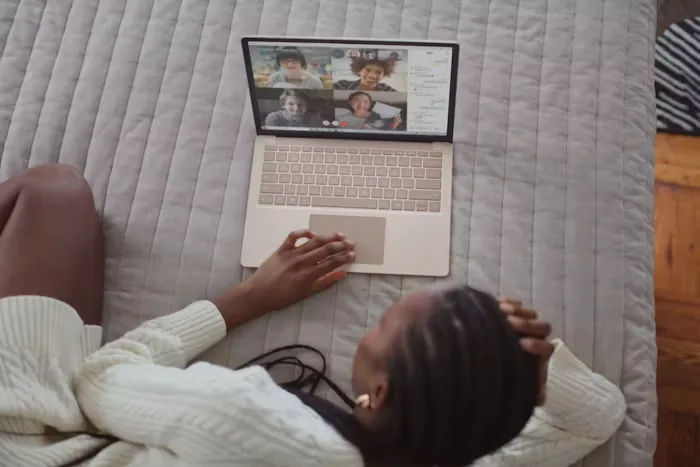
Long-distance friendship survives on ordinary contact, not heroic catch-up calls. The strongest routine is small enough to repeat on a tired Tuesday: one photograph, a ten-minute voice note, a shared match, or a question that can be answered without clearing an evening. A 2005 qualitative study of 25 women who had relocated repeatedly found that friendship maintenance relied on a mix of calls, email, cards, and visits rather than one perfect channel.
The technology has changed; the underlying job has not. Friends need a steady way to remain present in each other’s unremarkable days. Familiarity grows from repetition, so a modest weekly signal often carries more security than an elaborate reunion planned once a year.
Distance Usually Steals the Ordinary First
People rarely stop caring when a friend moves away. They lose the tiny updates that used to arrive without planning: the strange lunch, the bad commute, the song playing in a shop. Once every conversation must be scheduled, friends often wait until they have “enough news,” and silence stretches between major events.
The repair is not more intensity. It is lower friction. A photo with one honest sentence can carry more warmth than a postponed two-hour call, because it keeps the friendship inside daily life rather than turning it into an appointment both people feel guilty about missing.
A Check-In Must Be Easy Enough to Repeat
A useful ritual has a clear trigger and a forgiving rule. Sunday coffee photos work because nobody needs to invent a topic; a monthly walk-and-call works because both people can move while talking. Missing one round should not create debt.
Three formats tend to stay manageable:
- a recurring five-minute voice note with no demand for an immediate reply;
- one shared album for food, pets, streets, and small victories;
- a fixed monthly call that may be shortened, moved, or skipped without apology.
Shared Play Gives the Call a Plot
Competitive games give remote friends a reason to meet at a precise time, while the match supplies ready-made tension and jokes. The best sessions leave room for conversation instead of requiring constant concentration. A person reading an esports bet beside the match should separate the map price, series format, roster status, and official score feed before staking. Live odds can move after a round result reaches the trading system but before a delayed stream shows it. The shared ritual works when the stake stays secondary to the evening and the bankroll has a fixed ceiling.
A Table Can Still Feel Social on a Small Screen
Live-dealer games create a different rhythm because everybody watches the same physical round rather than controlling an avatar. Friends can compare choices, pause between rounds, and talk while the table resets. When friends open a table from live casino Philippines, the useful checks are the limit, countdown, rule variant, accepted wager, and transaction record. A late tap may be rejected even while the video still appears open, because the server and stream do not share one clock. Agreeing on an end time prevents a casual shared session from swallowing the entire call.
Randomness Needs Clearer Boundaries Than Friendship
Slots suit short, independent pauses, but they do not create the same shared decision as a match or table. RTP describes a theoretical return across a large number of rounds, while volatility describes how unevenly outcomes may arrive. Friends browsing online casino Malaysia should check the specific game’s information panel rather than treating a provider name as proof of one RTP setting. The UK Gambling Commission requires testing of RNG implementation and ongoing monitoring of game performance in its licensed market. A shared screenshot can be funny; copying somebody else’s stake size is not a friendship ritual.
Visits Need a Job Smaller Than “Catch Up”
An in-person visit fails when both friends expect it to compensate for a year of absence. Build the day around one ordinary task: buy groceries, walk the dog, cook breakfast, or revisit a familiar café. Conversation opens more naturally when nobody must produce emotional highlights on command.
Set one non-negotiable and leave the rest loose. A museum ticket may anchor the afternoon, but five reservations turn the reunion into logistics. If budgets differ, name the spending range before booking; quiet financial strain makes even affectionate plans feel uneven.
After the visit, send one photograph and one specific memory within a day or two. That small follow-up prevents the trip from becoming a sealed event. It also restarts the low-pressure contact that must carry the friendship until the next shared room.
Save the Long Call for What Text Cannot Carry
Small contact keeps the door open, but it cannot do every job. Grief, conflict, health news, and major decisions deserve tone of voice and enough time for silence. A simple message—“This feels bigger than texting; can we talk this week?”—marks the difference without making either person guess.
The practical test is whether the friendship contains both lightness and access. If months of memes hide a serious problem, schedule the call. If every call becomes an emotional audit, bring back one ordinary ritual: send the view from the kitchen, ask what is for dinner, and let the friendship be pleasantly small for a day.