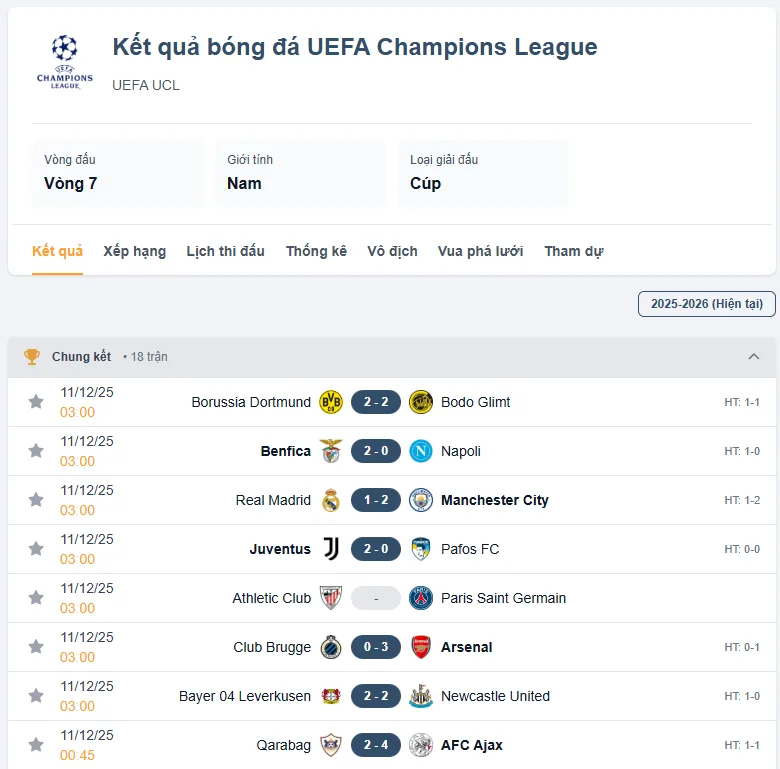
Champions League results arrive faster than the eye can refresh when elite European nights unfold across different stadiums and time zones. From group-stage kickoffs in September to the final whistle in late May, fans demand instant visibility into goals, cards, substitutions, and momentum shifts. A dedicated Champions League data hub answers that demand by transforming raw match events into live, structured information that stays synchronized with the action on the pitch.
Live score tracking at the Champions League data hub
Before diving into specific advantages, it is important to understand how live score tracking works in a Champions League–focused data hub. The system ingests millions of event signals per match day, processes them in real time, and delivers updates with near-zero delay. This creates a single, reliable environment for following Europe’s most prestigious club competition.
Real-time score updates with sub-second latency
Live score tracking relies on a real-time processing engine capable of handling over 500 million data points per day during peak match schedules. Match events such as goals, assists, penalties, and red cards are published within 0.3 seconds of occurrence. This update speed often outpaces traditional television broadcasts by 2–3 seconds.
Each match timeline refreshes automatically without manual reloads. Fans following simultaneous fixtures on Tuesday and Wednesday nights can switch between matches while retaining synchronized data streams. The experience remains consistent from the opening group-stage matchday in mid-September to the knockout rounds beginning in February.
Match timelines built from verified event sources
Accuracy defines the value of live score tracking in Champions League coverage. Every event passes through automated cross-checking mechanisms powered by AI validation models. These systems compare multiple data feeds to achieve an accuracy rate of 99.8%.
Event logs display minute-by-minute context. Goals include scorer, assist provider, and shot type. Cards list player name, reason, and match impact. Substitutions reflect tactical adjustments during high-pressure knockout ties.
Integrated access to fixtures, standings, and progression
Live score tracking connects directly with the competition structure. Group-stage matches update tables instantly, reflecting goal difference, points, and head-to-head ranking logic. Knockout-stage fixtures display aggregate scores across two legs, including away-goal logic where applicable in historical seasons.
Fans tracking qualification scenarios can combine live scores with UCL standings to understand how a single late goal reshapes group outcomes. This integration eliminates the need to consult multiple sources during match nights.
Five advantages exclusive to a Champions League data hub
A specialized data hub offers more than basic scorelines. It provides layered insights that enhance match understanding, tactical awareness, and long-term analysis. Below are five advantages that define a premium Champions League live score environment.
Advanced statistical overlays during live matches
Before exploring individual metrics, it helps to see how advanced statistics enrich live score tracking. Modern Champions League analysis goes beyond goals and possession, focusing on chance quality and spatial control.
Live dashboards include:
- Expected goals (xG) calculated through a model trained on Asian and European match patterns
- Shot maps displaying location, angle, and outcome
- Possession chains linked to shot creation sequences
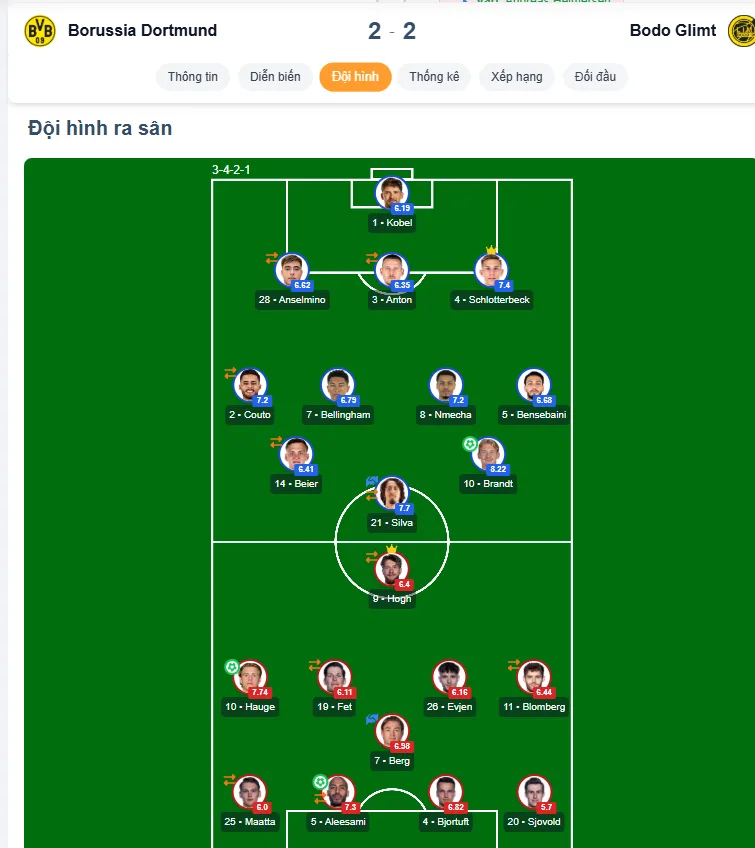
These metrics update dynamically during play. Fans can see whether a 1–0 lead reflects dominance or efficiency under pressure.
Heat maps and player movement visualization
Understanding tactical shape requires visual context. A Champions League data hub integrates heat maps that refresh as the match progresses. Player positioning, off-ball movement, and pressing zones appear in real time.
Heat maps highlight:
- Midfield overloads created by inverted fullbacks
- Defensive block depth during away fixtures
- Attacking width changes after substitutions
This feature benefits viewers analyzing elite tactical battles between managers such as Pep Guardiola, Carlo Ancelotti, or Jürgen Klopp across different seasons.
Professional pass maps and build-up analysis
After establishing spatial awareness, pass maps add clarity to ball circulation. Live pass networks show connections between players, pass frequency, and progressive movement into the final third.
Key elements include:
- Progressive passes completed under pressure
- Touches inside the penalty box
- Distance covered during attacking phases
These insights explain how top clubs break compact defenses during Champions League knockout matches. They also reveal why certain teams dominate possession without converting chances.
Historical depth combined with live context
A Champions League data hub does not operate in isolation from history. Live scores connect with a database containing match records dating back to 2006. This allows instant comparison between current fixtures and past encounters.
Examples include:
- Comparing current xG output with previous meetings between the same clubs
- Tracking goal frequency trends in semifinals versus group stages
- Measuring performance changes across different tournament formats
Historical overlays turn live matches into part of a broader analytical narrative rather than isolated events.
User-focused design and localized presentation
After covering data depth, usability determines long-term engagement. A Champions League data hub features a fully localized interface using standardized football terminology. Automatic conversion to Vietnam time ensures kickoff schedules align with local viewing habits.

The platform remains free to access, requiring no subscription or payment details. Mobile-responsive design supports desktops, tablets, and smartphones, enabling uninterrupted tracking during late-night European fixtures.
Structured data presentation for clarity
To help readers navigate dense information during matchdays, structured layouts play a key role. Below is an example of how Champions League live score data is organized for quick comprehension.
| Data layer | Description | Update frequency |
| Live score | Goals, cards, substitutions | 0.3 seconds |
| Match stats | Possession, shots, xG | Continuous |
| Tactical maps | Heat maps, pass networks | Real time |
| Standings | Group rankings, points | Instant |
This structure ensures fans can absorb complex information without cognitive overload.
Practical use cases during Champions League nights
Live score tracking supports multiple viewing behaviors. Casual fans check scores while commuting. Analysts monitor tactical shifts during matches. Bettors follow momentum swings based on statistical indicators.
The data hub adapts to each use case through customizable views. Users can pin favorite clubs, follow simultaneous matches, or focus on single-game tactical detail during semifinals and finals.
Conclusion
A Champions League data hub with live score tracking transforms how fans experience Europe’s premier club competition. Instant updates, verified accuracy, and advanced analytics combine to deliver clarity during the most intense match moments.
Integrated live scores, tactical visuals, and historical depth create a complete viewing companion from group stages to the final. For anyone following Champions League nights seriously, this approach defines the modern standard of football data consumption.